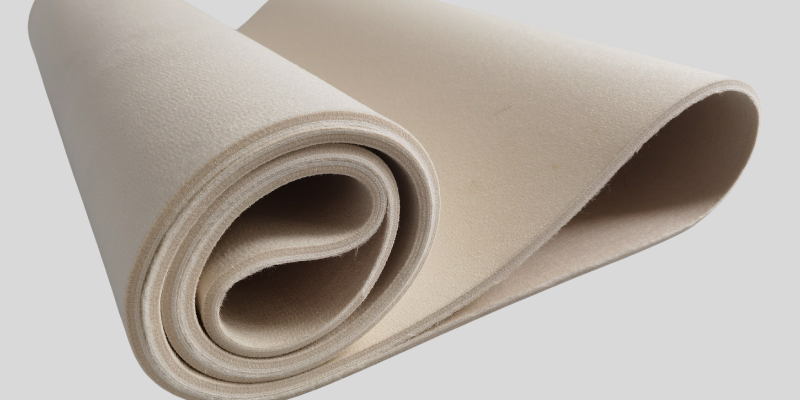
Felt Belt Overview
A felt belt is felt material made from artificial fiber materials through a needle-punching process. It has excellent temperature resistance, moisture absorption, wear resistance, and cushioning properties. They are widely used in industries such as textiles, printing, aluminum extrusion line, and laundry ironing. It is especially useful in situations requiring temperature resistance or wear resistance.
The characteristics of a felt belt include a high-density fiber structure, good elasticity recovery ability, and chemical corrosion resistance. Its features allow it to maintain stable performance in harsh environments.

Endless Felt For Heat transfer Machine
Manufacturing Process
From a manufacturing perspective, the production process of a felt belt involves steps such as fiber loosening, combing, laying the net, needle-punching molding, and post-treatment. Different production processes affect the density, thickness, and surface characteristics of the felt belts. This, in turn, influences its application scenarios. For example, those produced by the needle-punching process usually have higher density and better wear resistance. Consequently, they are suitable for high-load conveying applications.
Application Areas
In terms of application scenarios, felt belts are used in temperature-resistant and wear-resistant conveying systems. They can effectively withstand temperature and prevent material slippage. For instance, in textile finishing machinery, they convey fabrics for shrinkage and finishing. In digital heat transfer machines, they convey fabrics and printing paper on high-temperature rollers for thermal transfer printing. Additionally, they are used on aluminum profile extrusion lines to provide different temperature distributions and good wear resistance.
Selection & Maintenance
When choosing a felt belt, one needs to consider parameters such as tensile strength, temperature resistance range, chemical resistance, and thickness. For applications in an acidic environment, those with special chemical treatment are required. This prevents acid corrosion damage.
Also, attention should be paid to the installation and maintenance of the felt belt. Regular cleaning and inspection can extend its service life.
Types & Customization
There are various types of felt belts on the market, including endless and flat. Users can choose the appropriate type based on specific equipment requirements.
Moreover, customized services are becoming increasingly common. They allow users to customize felt belts of different sizes and performance according to special needs.
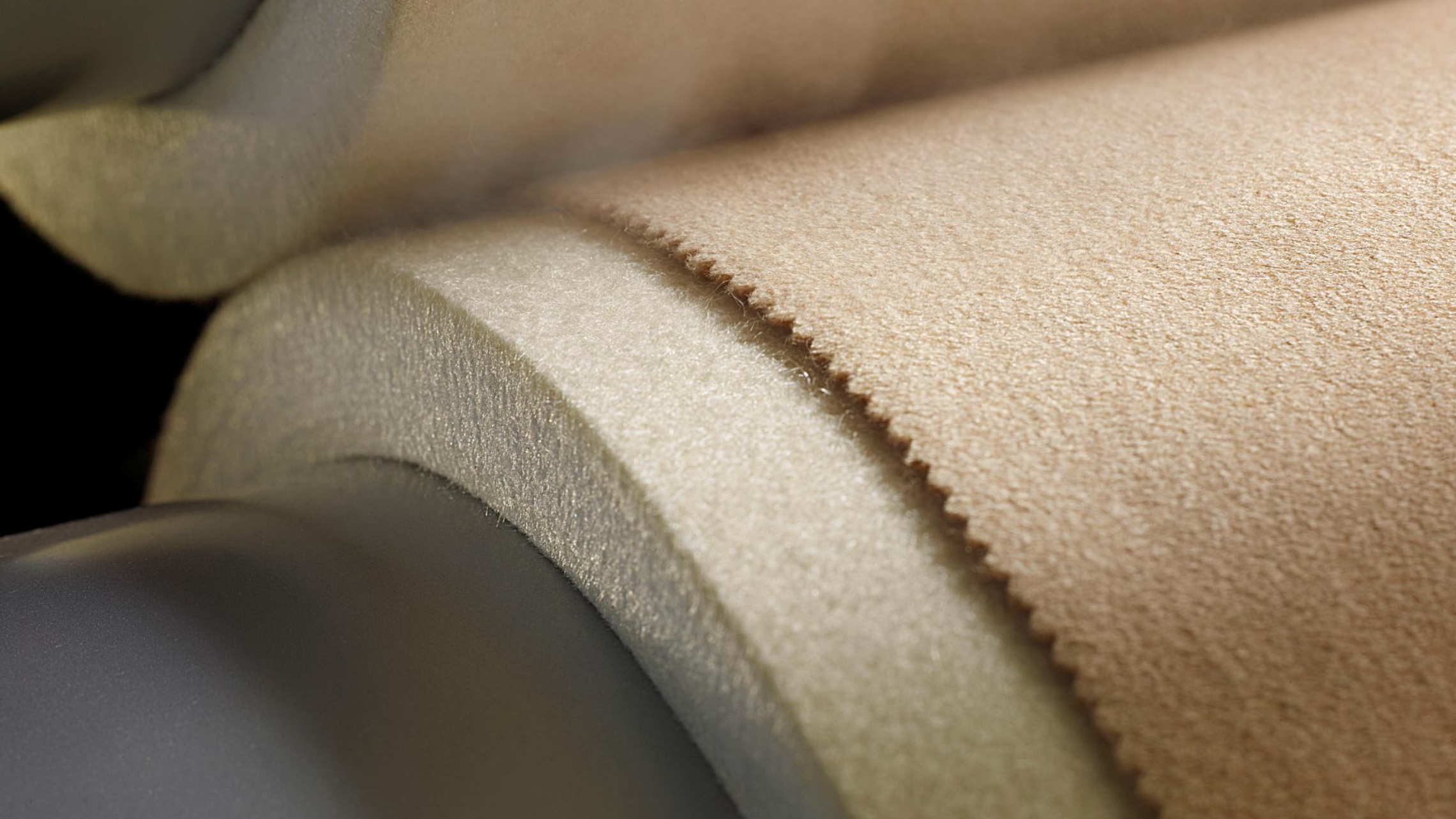
Endless Felt For Compacting Machine